
Shrouds
What if we were wrapped, rather than boxed?
I believe shrouds can offer us a soulful alternative to traditional coffins.
A shroud is a simple idea - a piece of fabric wrapped around the body and used to carry it to the place of burial or cremation, often with the addition of some kind of cradle or bier to give support.
A shroud is soft, rather than the hard edges of a coffin.
A shroud is closed by wrapping, tying or sewing, rather than with nails or screws.
A shroud offers us an opportunity for ritual care of the body, a chance to honour and say goodbye in an intimate and ancient way.
In using shrouds we can be kinder to the earth, using only what is needed and what can be gathered nearby, rather than shipping materials like veneered MDF or virgin hardwood half way around the world, only to be buried or burnt.
In a natural burial, a coffin presents a barrier between the microbes of the body and the microbes of the soil, slowing things down and creating air pockets in the soil. A shroud can enhance the reunion of the biomass of the body with the earth.
If you are interested in having a shroud, or talking about shrouds, please get in touch. I would love to hear from you.
See my new website QuietEarth - a space I am creating for my shrouds to be visible and available for sale.
I lead regular in-person and online workshops and retreats in which we can exlore shrouds and support each other in making and having a shroud for ourselves or for a loved one. See my events and sign up for news.
Recent shroud work
The Luddenden Shroud
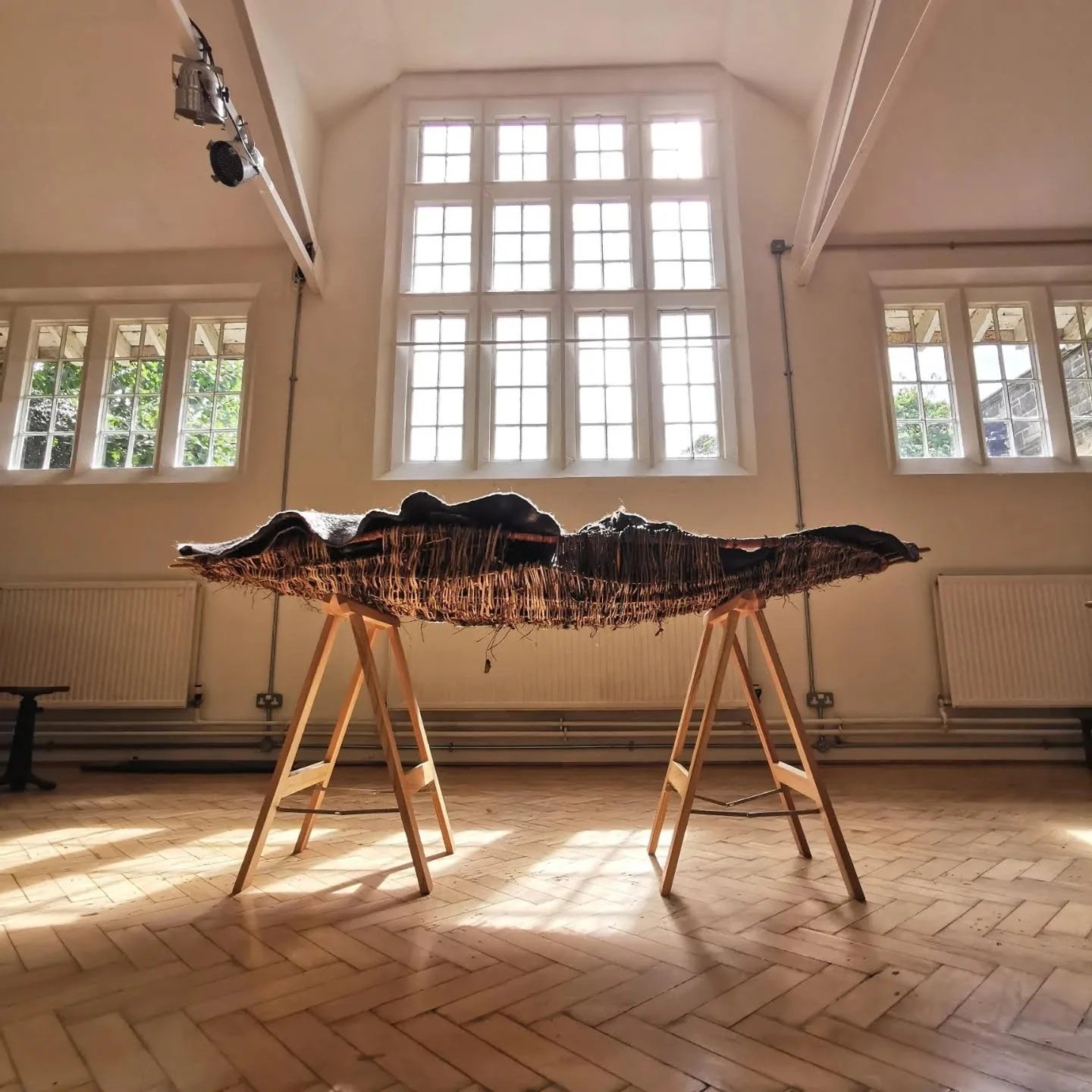
I made the Luddenden Shroud in 2024 as a commissioned art work which included the hand-felted shroud and a cradle made from foraged ivy, willow, holly and bramble, along with a film that tells the story of the making of the shroud.
The shroud is pictured here at Natural Endings, Todmorden.
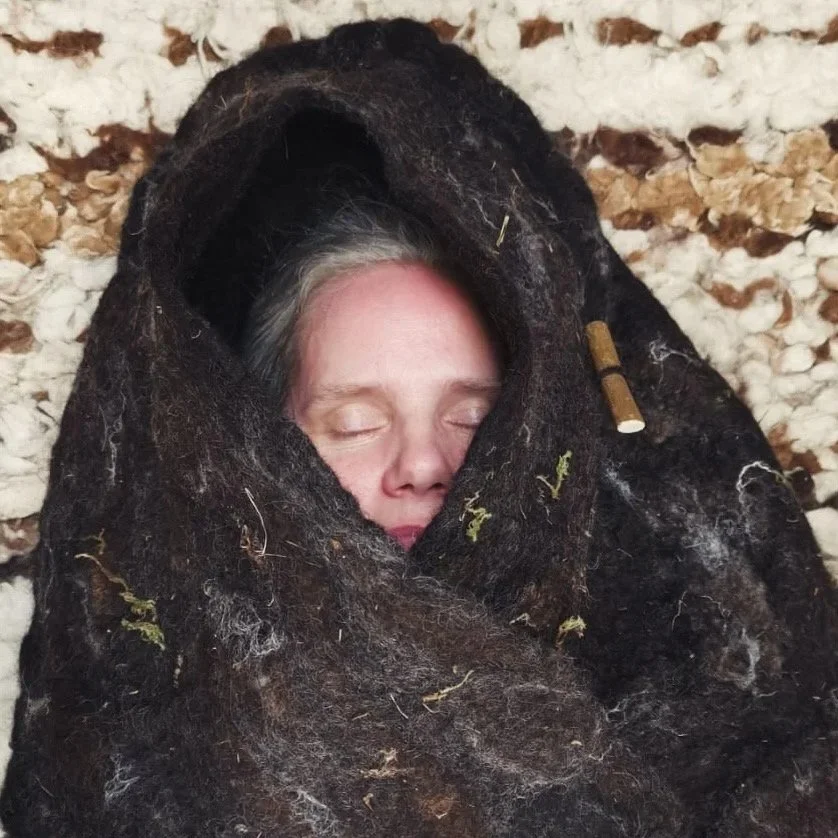
The Mycelium Shroud
The Mycelium Shroud is a hand-felted, cocoon-style, functional burial shroud made from British wool.
The wool was washed, carded, and felted by hand in my studio, incorporating moss, vegetation, and earth during the felting process so that the material quite literally carries the land within it.
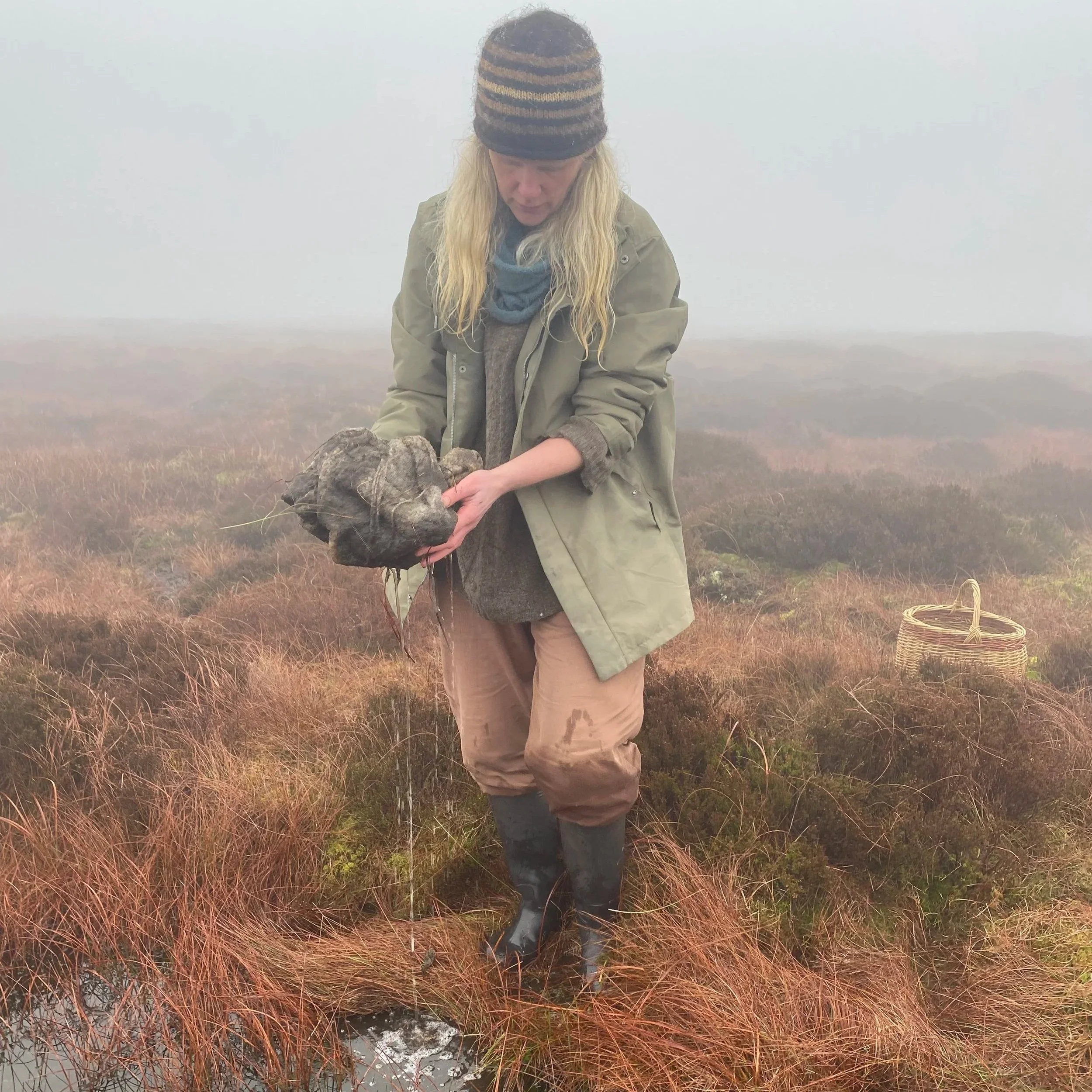
The Moorland Shroud
The Moorland Shroud is made of local British wool, hand-dyed with heather, alder, and iron. After making the shroud in sections, I took it up onto the moors and buried it in a peat bog for three nights.
This act allowed the landscape itself to continue the making process, staining, weighing, and marking the cloth through prolonged contact with wet earth and peat.
Unearthed, the shroud carries the imprint, tone, and memory of the moors.